
































Chip volume
What is chip volume and how is it calculated?
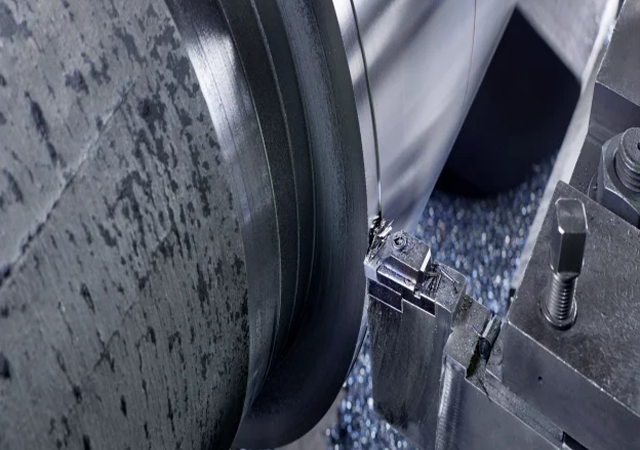
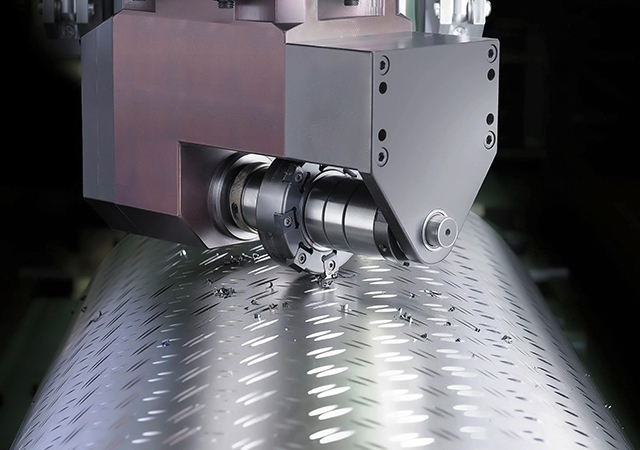
Chip volume (also called material removal rate) is the volume of material removed from a workpiece during machining. It is usually expressed in cubic millimeters (mm³) and indicates how much material is removed during the process. Chip volume is crucial for assessing the productivity and efficiency of machining operations.
Key factors affecting chip volume
Several factors determine the chip volume:
- Chip width – determined by the tool width or the depth of cut.
- Chip thickness – depends on cutting speed, feed, and depth of cut.
- Cutting length – the distance the tool travels during the machining process.
Additional influences include the workpiece material, tool geometry, and tool coating. The combination of these factors allows calculation of the chip volume, which is important for optimizing machining processes and tool life.
Calculation of chip volume
The calculation of chip volume is done by multiplying the three main dimensions: chip width, chip thickness, and cutting length. The basic formula for general turning operations is:
Q = Vc x ap x fn
| Quantity | Symbol | Unit |
|---|---|---|
| Chip volume (material removal rate) | Q | mm³/min |
| Cutting speed | Vc | m/min |
| Depth of cut | ap | mm |
| Feed per revolution | fn | mm/rev |
The exact chip volume depends on the type of machining process (milling, drilling, etc.) and can be adapted with specific modifications of the formula for each process.
Milling
Q = ap x ae x Vf / 1.000
| Quantity | Symbol | Unit |
|---|---|---|
| Chip volume | Q | mm³/min |
| Axial depth of cut | ap | mm |
| Radial depth of cut | ae | mm |
| Table feed | Vf | m/min |
Drilling
Q = Dc x fn x Vc / 4
| Quantity | Symbol | Unit |
|---|---|---|
| Chip volume | Q | mm³/min |
| Drill diameter | Dc | mm |
| Feed per revolution | fn | mm/rev |
| Cutting speed | Vc | m/min |
Benefits of knowing chip volume
Chip volume offers several advantages in machining that help optimize manufacturing processes. One key benefit is assessing efficiency, as it provides an accurate measurement of the material removed, allowing evaluation of process productivity. Additionally, knowing the chip volume is important for determining optimal maintenance intervals, which can significantly extend the lifespan of expensive machines and tooling. Continuous monitoring of chip volume also enables early detection and correction of deviations in the machining process, contributing greatly to quality assurance.
Another advantage is cost efficiency. By precisely controlling chip volume, material usage is optimized, which can reduce production costs. Furthermore, understanding chip volume helps in selecting the optimal machining parameters—such as feed, spindle speed, and cutting speed—to maximize material removal and minimize machining time.
FAQ
Chip volume is the volume of material removed from a workpiece during machining. It is usually expressed in cubic millimeters (mm³).
The material removal rate is determined by chip width, chip thickness, and cutting length. Additional factors include the workpiece material as well as the tool geometry and coating.
Knowing the material removal rate allows for efficient process evaluation and optimization of tool life. It improves quality assurance and contributes to cost efficiency.